Every recommendation the Gigaton Project makes traces back to research produced here. The 'G' Lab is where 25 years of urban climate science by Prof. Dr. Jürgen Kropp's group at PIK becomes actionable tools, open datasets, and peer-reviewed findings — ready for cities, corporations, and policymakers to act on.
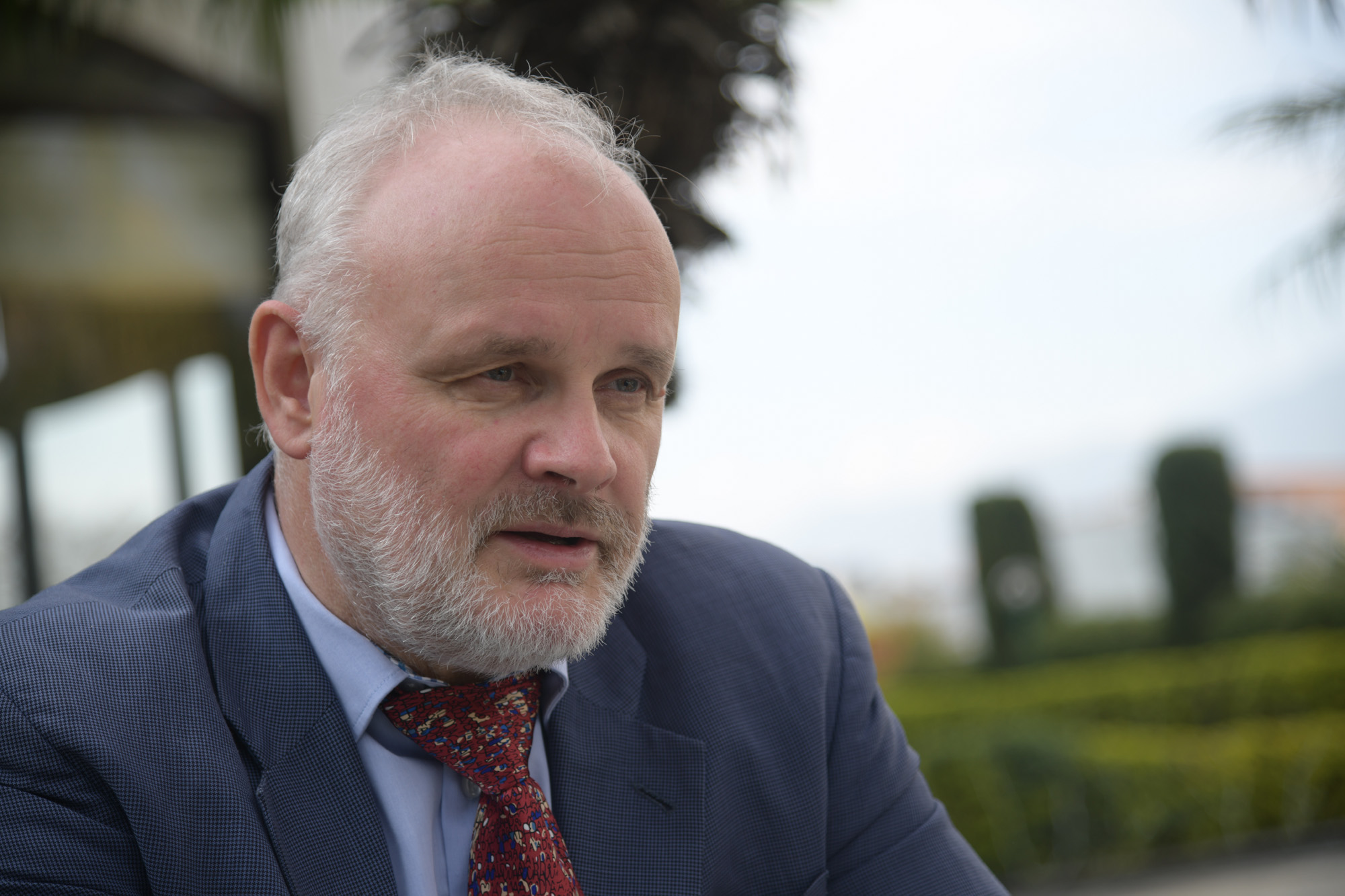
A chemist and physicist by training, Jürgen Kropp has spent more than two decades at the Potsdam Institute for Climate Impact Research developing the scientific tools to understand cities as carbon-emitting, heat-producing, and food-consuming systems. His group's research — spanning urban emission profiles, built environment carbon costs, heat burden modelling, and the nexus between corporate and urban climate action — forms the direct scientific foundation of the 'G' Lab and every recommendation that flows from it.
These four frontiers define the scientific backbone of the Gigaton Project. Every tool, dataset, and recommendation we produce is grounded in at least one of them.
Corporate and city emission inventories are currently incompatible — different scopes, boundaries, and methodologies make comparison meaningless. RF1 develops the harmonised accounting frameworks that allow emissions to be counted consistently across sectors, geographies, and reporting standards.
A single decarbonisation trajectory cannot serve steel, cement, aviation, and agriculture equally. RF2 builds sector-by-sector science-based pathways that reflect the different physics, economics, and timescales of each industry — enabling realistic, credible targets rather than uniform pledges.
When a company reports a 6% emission reduction, what caused it — a drop in production activity, a genuine efficiency gain, or a fuel-mix shift? RF3 applies formal decomposition methods to disentangle these drivers, making emission trends interpretable, attributable, and auditable.
Even after maximum decarbonisation effort, some emissions cannot be eliminated with current technology. RF4 quantifies this hard-to-abate floor for each sector — establishing what residual emissions are scientifically defensible, and what claims of net-zero actually require.
After more than two decades leading the Urban Transformation Research Group at the Potsdam Institute for Climate Impact Research, Prof. Kropp has brought his entire scientific programme to the Gigaton Project. The 119 publications, the methodologies, the models — this accumulated body of work now forms the independent scientific foundation of the 'G' Lab, carried forward under new institutional homes and with full independence.
What 25 years of research established — and what each finding means for how we design the Gigaton Project's recommendations.
The 'G' Lab translates research into usable instruments — datasets, models, and analytical tools that cities and corporations can apply directly.
Whether you're a city mapping your emissions, a corporation building a credible pathway, or a researcher looking to collaborate — the 'G' Lab has a door open for you.